Lennie visits Bailey’s grave for the first time
The Sky Is EverywhereLennie visits Bailey’s grave for the first time after months of avoiding the cemetery and the physical facts of death. The visit brings her face to face with the sister she has tried to keep close through objects at home, but it also changes what remembrance means: instead of clinging only to what Bailey left behind, Lennie carries her a record of family history and discovers the future that had been planned for her. The grave becomes a place where loss is undeniable, yet Bailey’s life and continuing place in the family can still be acknowledged.
Causes and Background
After Bailey’s death, Lennie stays away from the cemetery. She cannot keep thoughts of decaying flesh, maggots, and skeletons out of her mind, and avoiding Bailey’s grave becomes one way to hold those images back. At home, she still handles objects in Bailey’s room, including the hair caught in her brush and unwashed laundry. But she begins to recognize that preserving these things indefinitely is not necessarily what Bailey would have wanted; she imagines Bailey judging the untouched room as grotesque and dismal. That realization helps shift her attention from guarding remnants to considering how she might go to the grave.
The first approach is shared with Toby. Lennie suggests that they visit Bailey, and Toby agrees without hesitation. His easy response surprises her. During the conversation around the trip, Toby describes how much he had wanted to marry Bailey, welcome their baby, and become part of the Walker family. He also admits that his wish to support Lennie after Bailey’s death became confused with his own growing closeness to her. The cemetery visit therefore begins amid grief that has drawn the two of them together in ways they both regret, as well as their continuing connection through Bailey.
Toby tells Lennie that Gram visits Bailey’s grave almost every day. Gram has planted roses and other flowers there, repeatedly replacing them after the cemetery groundskeepers removed them until they finally stopped. This detail makes Lennie feel excluded: the rest of the family has been going to Bailey, while she has remained apart. It also shows how Gram has made the cemetery an active place of care, refusing to let the rules against her plantings end that expression of love.
The Visit and Its Objects
In a later journey to the cemetery, Lennie sets out with a backpack and runs along the trail. Sunlight falls in separate blocks through the canopy, carrying her through alternating light and shade. As she runs, she feels the fabric of death that has clung to her for months begin to loosen. The movement does not mean she has left Bailey behind; it places her in motion toward the next part of her own life, after grief has made the existence of a future feel unbearable.
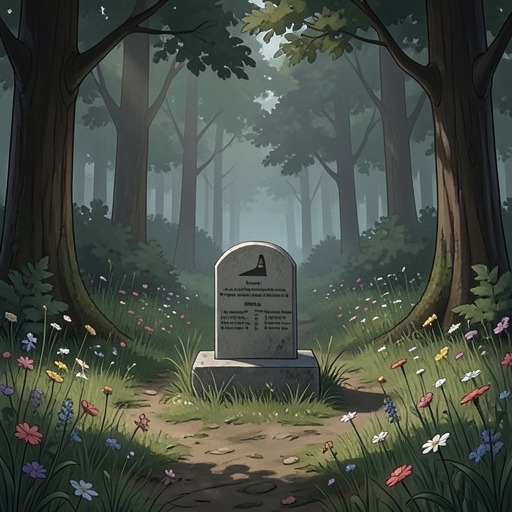
At the small hilltop cemetery, Lennie is alone. She sits beside Bailey’s stone and wraps her arms around it, resting her head against its warmth. The family chose a gravestone with a small cabinet, like a reliquary, behind a metal door engraved with a bird. Lennie traces Bailey’s name and the age nineteen, then the words of The Color of Extraordinary, which she wrote on paper and handed to Gram in the funeral parlor. The inscription brings the language of Bailey’s extraordinary life into direct contact with the fact of her death.
Lennie opens the cabinet to leave a notebook in which she has transcribed Gram’s letters to their mother, written over the sixteen years of their mother’s absence. She wants Bailey to have those words and to know that the family story still includes her. The gesture makes the grave more than a place where Lennie faces death: it becomes a place to carry something of the family’s history to Bailey, including the relationship with their absent mother that Bailey had tried to understand.
As Lennie places the notebook inside, she hears something scrape and finds a ring. The orange topaz is large as an acorn, and she recognizes it as something Toby must have had made for Bailey. She understands that Bailey never saw it and imagines it was meant for the couple’s announcement of their marriage and baby. Lennie sets the ring on the gravestone, where it catches the sun and throws amber light across the engraved words. The discovery gives material form to the future Bailey and Toby had anticipated, and to the abruptness with which that future was taken away.
Consequences and Significance
At the grave, Lennie cannot fend off the scale of her sadness. The ring sharpens the contrast between what remains—the name, the stone, the notebook, the ring—and what Bailey will not live to experience. Yet the visit also marks a change in Lennie’s relationship to the objects she has used to keep loss at a distance. Rather than treating Bailey’s room as a sealed preservation of the past, she brings new words to the grave and leaves the ring in the light.
The visit belongs to a broader movement between confronting loss and returning to life. Lennie has been overwhelmed by grief, but she also begins to recognize that Bailey’s example can teach her how to live with greater daring and spirit. The distinction matters: she does not conclude that Bailey’s death was justified by anything good that followed, or that growth cancels its cost. Instead, Bailey’s life, rather than death alone, becomes a source of guidance. When Lennie later understands grief as something that will remain with her because her love for Bailey remains, the cemetery visit has helped make that continuing bond concrete. She can miss Bailey and grieve the future Bailey will never see while still moving toward her own.